If you’re thinking about adding more space to your home, this question usually comes up quite early.
What’s the difference between a conservatory and an orangery?
At first glance, they can seem quite similar. Both add extra room. Both bring in more light. Both create a space that feels more open than a standard room. And both can make the back of your home feel more connected to the garden.
But once you look closer, the differences become much clearer.
A conservatory usually has more glass, a lighter structure, and a more obvious garden-room feel. An orangery tends to feel more solid, more enclosed, and more like a natural extension of the house. That difference affects not just the look, but also the cost, the way the room feels, how it is used, and how well it blends with the rest of the property.
If you’re trying to decide between the two, it helps to understand what each one actually offers in real life, not just in brochures or sales pages.
This guide breaks it all down in plain English so you can see which option is more likely to suit your home, your budget, and the way you want to use the space.
What Is a Conservatory?
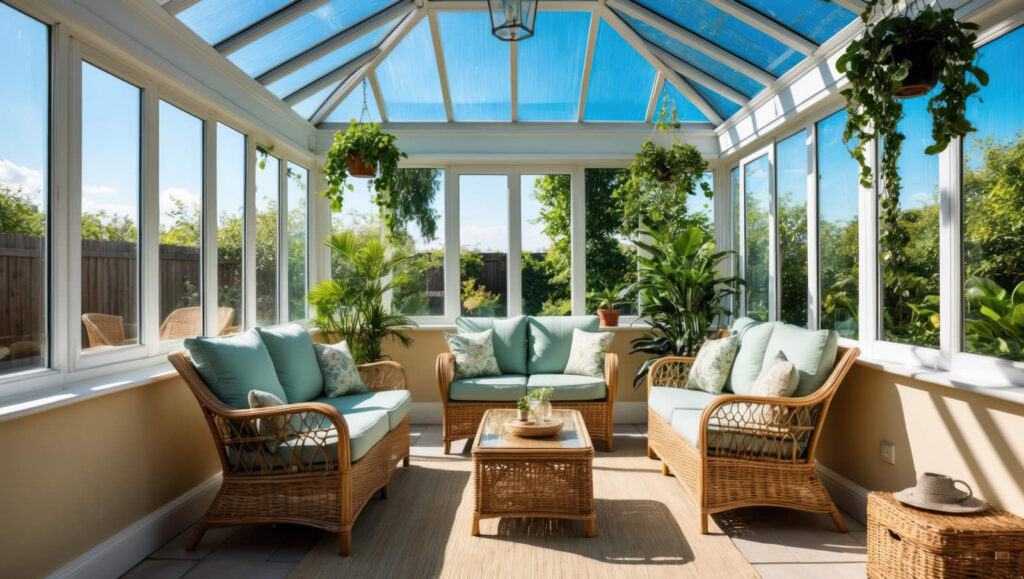
A conservatory is a glazed extension that usually features a high proportion of glass in both the walls and the roof.
Traditionally, conservatories were built as bright garden rooms. They were designed to let in as much daylight as possible. That is why you often see large glass panels, slim frames, and roof sections that are mostly transparent or translucent.
In many homes, a conservatory feels separate from the main house. Even when it is attached to the property, it often has a slightly lighter, more outdoor feel.
That can be a big part of the appeal.
A conservatory often works well if you want:
- A bright place to sit
- More connection to the garden
- A room that feels airy and open
- A lower-cost way to add space
For many homeowners, that level of brightness is exactly what makes a conservatory attractive.
What Is an Orangery?
An orangery is also an extension, but it usually has more solid structure than a conservatory.
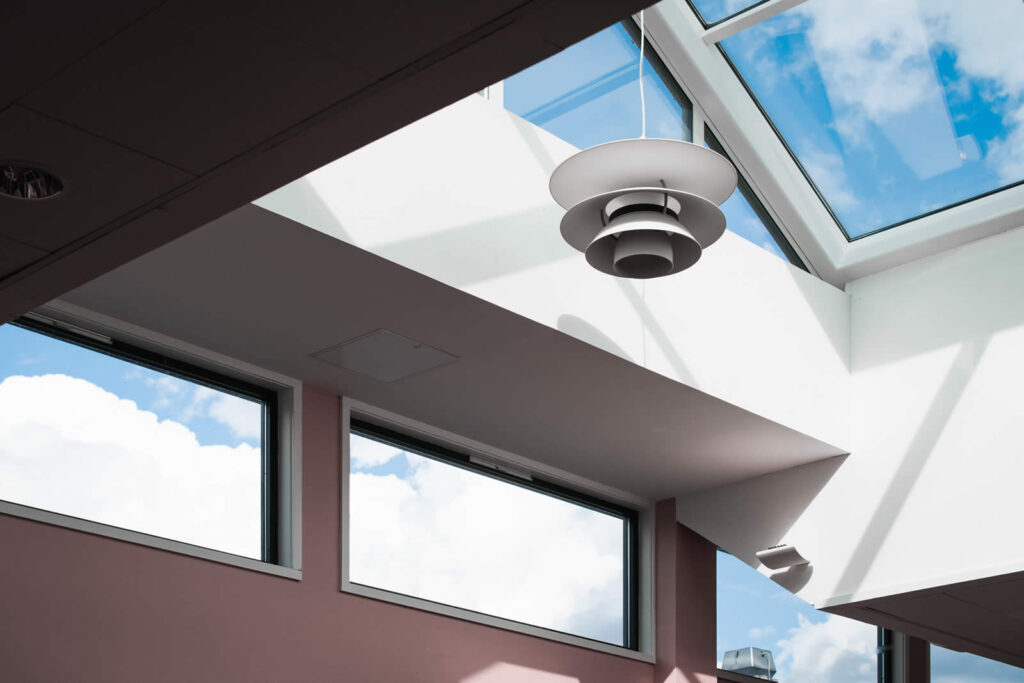
Instead of being mostly glass, an orangery often includes brick pillars, more substantial walls, and a solid roof perimeter with a glazed roof lantern in the centre. Because of that, it tends to feel more like a permanent room and less like a glass add-on.
Orangeries were originally used on large properties to grow citrus trees, which is where the name comes from. Modern orangeries are very different in purpose, but they still keep that more solid, elegant look.
In everyday terms, an orangery sits somewhere between a conservatory and a full extension.
It still brings in plenty of light, but it often feels more enclosed, more insulated, and more integrated with the home.
That is why people often choose an orangery when they want:
- A room that feels more like part of the house
- A more substantial structure
- Better year-round use
- A more premium appearance
Is the Main Difference the Amount of Glass?
Yes, that is one of the biggest differences.
A conservatory usually has:
- More glazing in the walls
- More glazing in the roof
- A lighter visual look
An orangery usually has:
- More brickwork or solid structure
- Less glass overall
- A more balanced mix of solid elements and glazing
This changes how the room looks from both inside and outside.
In a conservatory, the glass often becomes the main feature. In an orangery, the structure plays a bigger role. That can make the orangery feel more grounded and more in keeping with the house, especially on traditional properties.
Which One Feels More Like a Real Room?
An orangery usually feels more like a real room.
That does not mean a conservatory cannot be comfortable or stylish, because many modern conservatories are excellent spaces. But an orangery tends to have a more solid and settled feel. The walls are usually chunkier. The roofline often feels more architectural. The room often blends into the home more naturally.
A conservatory can sometimes feel like an in-between space. That may be exactly what you want if your goal is a bright sitting room, dining area, or garden-facing space.
An orangery often feels more like an everyday extension of your kitchen, lounge, or dining room.
So the choice often comes down to how you want the room to feel.
Do you want something lighter and more open, or something more enclosed and more like part of the main house?
Which Is Better for Natural Light?
A conservatory usually wins when it comes to maximum natural light.
Because it uses more glass, it tends to let in more daylight from more angles. On bright days, that can make the whole space feel open, uplifting, and full of energy.
If your priority is creating a sunny room with strong garden views, a conservatory often makes sense.
An orangery still brings in a lot of light, especially if it has a large roof lantern and wide glazed doors, but it usually gives a more controlled level of brightness.
That can actually be a benefit.
Too much glass can sometimes make a room feel overly bright in summer or a bit exposed in the evening. An orangery often strikes a middle ground. You still get plenty of light, but the room can feel calmer and more balanced.
Which One Is Better for Year-Round Use?
This depends on design, glazing, insulation, and build quality, but in many cases an orangery is better suited to year-round use.
Because it has more solid elements, an orangery often feels more stable in temperature. It may stay cooler in very hot weather and feel less exposed during colder months.
Older conservatories had a reputation for being too hot in summer and too cold in winter. That is still part of how many people think about them.
Modern conservatories are much better than older ones, especially when they use improved glazing and better roof systems, but the perception still exists for a reason. A room with more glass will usually feel more affected by the weather than a room with more solid structure.
That is why an orangery often appeals if you want a room you can use every day, through every season, with less concern about temperature swings.
Which One Looks Better on a House?
This depends on the style of your property and the look you prefer.
A conservatory often suits homes where you want the addition to feel lighter and less dominant. It can work especially well on properties where a bright, open garden room feels right.
An orangery often suits homes where you want the extension to look more permanent and more in keeping with the original building. The brickwork, columns, and roof details can help it blend in better, especially on period homes or larger detached properties.
In simple terms:
- A conservatory often looks lighter
- An orangery often looks more substantial
- A conservatory can feel more separate
- An orangery often feels more integrated
Neither is automatically better. It is more about what suits the property and what kind of finish you want.
Which One Costs More?
An orangery usually costs more than a conservatory.
That is because it often includes:
- More building work
- More brickwork
- A more complex roof structure
- A more extension-like design
A conservatory is often seen as the more affordable option, especially for homeowners who want extra space without the higher cost of a full extension.
That said, costs can vary a lot depending on size, specification, roof type, glazing, doors, groundwork, and finishes. A high-end conservatory can cost more than a basic orangery in some cases, but as a general rule, orangeries sit at the higher end.
If budget is a major factor, a conservatory may feel like the more accessible route.
If long-term feel and finish matter more, some homeowners decide the extra cost of an orangery is worth it.
Which One Adds More Value?
There is no fixed answer because property value depends on location, quality, design, and how well the new space works with the home.
That said, an orangery is often seen as adding a more premium feel. Because it looks more like a permanent extension, buyers may view it as a more integrated improvement.
A conservatory can still add value, especially if it is well designed, in good condition, and genuinely useful. A bright extra room is still a strong selling point in many homes.
The bigger question is often not just value on paper, but value in everyday life.
Will you use it often? Will it make your home work better? Will it improve how the space feels?
A room that gets used and enjoyed tends to feel worthwhile, regardless of the label.
Do Conservatories and Orangeries Need Planning Permission?
Sometimes yes, sometimes no.
Both conservatories and orangeries may fall under permitted development in certain situations, which means formal planning permission may not be needed. But that depends on factors such as size, height, location, and the type of property.
If your home is listed, in a conservation area, or affected by planning restrictions, the rules may be tighter.
Because both structures are extensions in some form, it is always sensible to check before work begins.
That matters even more if you are comparing a simple conservatory with a larger orangery, because the size and structure of the orangery may bring different considerations into play.
Which One Is Better for Open-Plan Living?
An orangery often works better for open-plan layouts.
Because it tends to be built more like an extension, it often connects to the house in a more natural way. This makes it popular for kitchen extensions, dining areas, and family spaces where you want the new room to feel fully part of the home.
A conservatory can also be opened up, but it more often keeps that distinct garden-room feel.
If your aim is to create a large open kitchen-diner with plenty of light, an orangery often fits that vision better.
If your aim is to create a bright extra room that feels a little more separate from the main house, a conservatory may be the better match.
Which One Is Easier to Furnish?
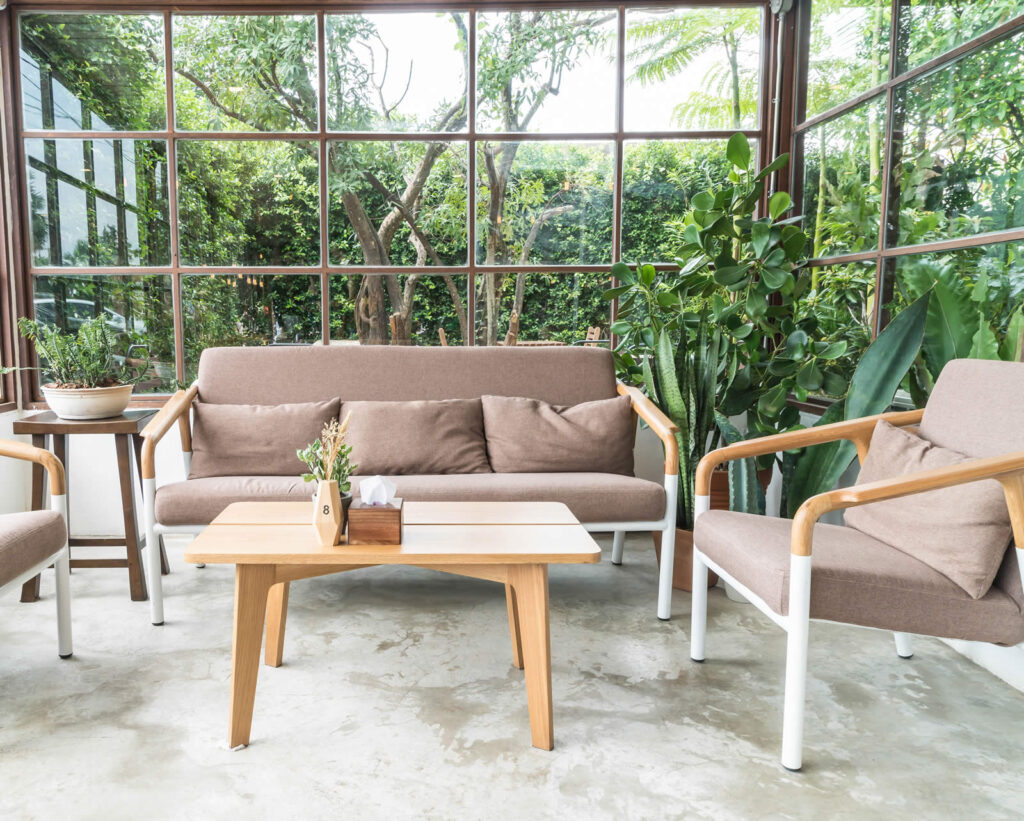
An orangery is often easier to furnish because it usually has more solid wall space.
That gives you more options for:
- Sofas
- Storage
- Artwork
- Lighting
- Dining furniture
A conservatory often gives you less usable wall space because so much of the room is glazed. That is not necessarily a bad thing, but it does change how you plan the room.
If you want a very flexible living area with more conventional furniture layout, an orangery often gives you more freedom.
If you are happy to build the room around the views, the light, and a lighter furniture arrangement, a conservatory can still work beautifully.
Which One Feels More Private?
An orangery often feels more private.
Because it has more solid walls and less glazing, it can feel more enclosed and less exposed. This matters if your garden is overlooked or if neighbouring homes sit quite close.
A conservatory can sometimes feel more visible, especially in the evening when interior lights are on.
This does not mean you cannot create privacy in a conservatory, because blinds, roof shading, and thoughtful layout can help a lot. But the starting point is different.
If privacy is high on your list, an orangery may feel more comfortable from day one.
Which One Works Better for Modern Homes?
Both can work well, but in different ways.
A modern conservatory can suit contemporary homes where clean glass lines and open views look right. Slim frames and simple shapes often work especially well in newer properties.
A modern orangery can also look excellent, especially if you want a sharper, more architectural finish. Roof lanterns, large sliding doors, and crisp brickwork can make it feel very high-end.
So this is less about whether the property is modern and more about the look you want to create.
Do you want the addition to feel light and transparent, or solid and refined?
Which One Is Right for Smaller Homes?
A conservatory can work very well on a smaller home because it tends to feel less heavy visually.
The glass helps the structure feel open rather than bulky. That can be useful if you want to add space without making the rear of the property feel too built up.
An orangery can also work on a smaller home, but the design needs to be handled carefully. Too much brickwork or too much roof mass can make the addition feel heavier if the proportions are not right.
If space is tight and you want to keep things bright and open, a conservatory often feels like the more natural fit.
Which One Is Better If You Want a More Premium Finish?
An orangery is usually the option people choose when they want a more premium feel.
That comes down to the structure, the detailing, and the way it sits against the property. It often looks more bespoke and less like an add-on.
That does not mean conservatories cannot look high quality. Many do. But the word orangery tends to bring a stronger sense of permanence and design.
If the goal is to create a room that feels closer to a high-end extension than a traditional sunroom, an orangery often comes out ahead.
Is One More Popular Than the Other?
Both remain popular, but for slightly different reasons.
Conservatories appeal to homeowners who want:
- More light
- More garden connection
- A lower-cost route to extra space
Orangeries appeal to homeowners who want:
- A more substantial extension
- A room that feels more like part of the house
- A more premium finish
Popularity often depends on budget, property style, and what the room is meant to do.
So Which Should You Choose?
The best choice depends on what matters most to you.
A conservatory may be the better option if you want a bright, airy room with lots of glass and strong garden views. It often works well when you want extra space without pushing the budget too far.
An orangery may be the better option if you want a room that feels more solid, more private, and more like a true extension of your home. It often suits homeowners who want a more integrated finish and are happy to invest more for that feel.
You are not just choosing between two building styles.
You are choosing between two different ways a room can feel.
That is usually the most useful way to think about it.
Final Thoughts on the Difference Between a Conservatory and an Orangery
The difference between a conservatory and an orangery comes down to more than appearance.
A conservatory usually gives you more glass, more light, and more of that traditional garden-room character.
An orangery usually gives you more structure, more solidity, and more of that extension-like feel.
Neither one is automatically better.
The right choice depends on your home, your budget, and how you want to use the space. If you want something bright and open, a conservatory may be right for you. If you want something more substantial and more connected to the rest of the house, an orangery may be the better fit.
Once you’re clear on that, the decision becomes much easier.